
Translating....
God Wishes To Be Seen, Wishes To
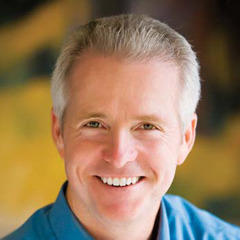
God wishes to be seen, wishes to be sought, wishes to be expected, and wishes to be trusted.
Cite this Page
Prevent plagiarism by providing proper attribution.Embed this Quote
Copy this HTML code to embed the quote on your website or blog.Quote Context & Analysis
The Meaning
John Ortberg's succinct articulation "god wishes to be seen, wishes to be sought, wishes to be expected, and wishes to be trusted" profoundly distills a theological perspective on the nature of the divine-human relationship. Each 'wish' represents a distinct facet of engagement. "Wishes to be seen" speaks to the immanence of God, suggesting a presence discernible within creation, human experience, and revelation; it implies an invitation to perceive the divine actively and consciously, moving beyond mere intellectual assent to experiential awareness. "Wishes to be sought" emphasizes the interactive and volitional aspect of faith. It posits that God is not merely discovered passively but is responsive to earnest inquiry and spiritual pursuit, advocating for a pilgrimage of continuous exploration and devotion. "Wishes to be expected" introduces the dimension of hope and anticipation. It suggests that the divine operates within the realm of future possibility, encouraging a posture of expectant faith in divine intervention, guidance, or presence, transforming potential anxiety about the unknown into hopeful waiting. Finally, "wishes to be trusted" encapsulates the foundational demand for absolute reliance and faithfulness. This is the culmination of seeing, seeking, and expecting; it necessitates a surrender to divine sovereignty and goodness, even when understanding is incomplete or circumstances are challenging. Philosophically, this quote explores themes of divine epistemology (how we know God), relational ontology (the nature of being-in-relation with God), and the ethics of human response (how we ought to live in light of such a God).
Historical Context
John Ortberg is a prominent contemporary American author, speaker, and pastor, best known for his work on spiritual formation and Christian living. He served as the teaching pastor at Willow Creek Community Church and later as the senior pastor of Menlo Church in California. This quote is characteristic of Ortberg's theological approach, which often focuses on making complex spiritual concepts accessible and practically applicable to modern life. It was likely articulated in the late 20th or early 21st century, a period marked by significant shifts in Western spirituality. In this era, there was a growing desire for personal, experiential faith beyond mere ritual or doctrine, often termed "spiritual but not religious" in broader society, but within evangelical Christianity, it manifested as a search for deeper intimacy and authenticity with God. Ortberg's emphasis on God's 'wishes' positions the divine not as an aloof cosmic judge, but as a relational being actively desiring engagement. This aligns with a broader evangelical trend of emphasizing God's personality, love, and desire for communion, contrasting with more distant or purely transcendent portrayals of divinity. His work draws heavily from the tradition of spiritual disciplines and Christian mysticism, filtered through a contemporary evangelical lens, making ancient practices relevant to a modern audience grappling with issues of meaning, purpose, and relationship in a rapidly changing world.
Modern Application
Ortberg's wisdom, while theological in origin, offers profound principles applicable to modern life, leadership, and business, even from a secular perspective. "Wishes to be seen" translates into cultivating acute awareness and mindful observation. In leadership, this means truly 'seeing' your team, customers, and market dynamics—not just looking, but perceiving their needs, contributions, and challenges. In business, it's about discerning emerging trends, overlooked opportunities, or unseen risks. "Wishes to be sought" encourages proactive inquiry and relentless learning. Leaders must continuously seek innovative solutions, better strategies, and deeper understanding of complex problems. In personal development, it means actively pursuing knowledge, skills, and personal growth rather than waiting for insights to arrive passively. "Wishes to be expected" fosters an optimistic, future-oriented mindset. In leadership, this means building a culture of hope and resilience, expecting positive outcomes and encouraging a belief in the potential for success, even amidst setbacks. It's about strategic foresight and planning with an assumption of future progress. "Wishes to be trusted" is fundamental to building strong relationships and effective organizations. Trust is the bedrock of any successful team or business venture. Leaders must cultivate trust through integrity, transparency, and consistent reliability, while also extending trust to their employees, empowering them and fostering autonomy. In personal life, it means having confidence in one's chosen path, values, or the inherent goodness of humanity, enabling robust decision-making and resilience through uncertainty. Together, these 'wishes' advocate for an active, engaged, hopeful, and trust-centered approach to navigating the complexities of the contemporary world.


